Sunday, July 14, 2013
"We realized the importance of pens and books when we saw the guns."
Malala Yousafzai, 16 years old.

Saturday, July 13, 2013
On the "Spray and Count" Approach to Understanding Literature
This piece in the Times' Sunday Review for July 14 gets a mixed review from The Omnivorous Reader. On the one hand, it makes The Reader quite happy that the Times believes readers need to be reminded that "Not long ago, for example, critics focused their attention almost exclusively on white male authors." O to have those dark days of my undergraduate years become faint memory! On the other hand, I have to wonder if any regular feature called "Gray Matter" could have applied less of that substance to the printed matter at hand?
Apparently the author of this essay and of the essay in the journal Social Science History, to which he refers us, has concluded that simply toting up the occurrence of certain words in an era's literary output offers a keen insight into the pressing concerns of the day. What a time saver! For example, the immediate post-Seneca Falls writings of many women did show a marked increase in the words "women's rights" so the author of the study concludes that women's rights was of increasing concern during those decades. Golly. And the uptick in the occurrence of some words after 1960 "caring, nurturing, infant, toddler and childhood" proves that a positive focus on children was the hallmark of the era, thus Thomas Pynchon (a nihilist? really?) was an outlier.
The author of the Times essay--an historian, but not, apparently ab hiustorian of literature--concludes that the "insights [these word frequency databases] make possible should encourage scholars to revisit longstanding assumptions with a critical eye."
Let's set aside for the moment that David Lodge predicted and admirably spoofed word-frequency analysis in Changing Places (or possibly its sequel Small World--no matter, both are brilliantly funny). And let's further set aside that entomologists deride a similarly mechanical approach to understanding insect ecologies as "Spray and Count." Let's simply think about the possibility that writers may have lots of concerns, frequently highly mixed concerns. If they just wanted to espouse viewpoints they would have written pamphlets or bumper stickers. "Domesticity No! Women's Rights Yes!" would have been an admirable, a positively Strunkian, savings of words over, say, the 500 pages of Fettered for Life, or, Lord and Master: A Story of Today or even over the relatively brief "A Jury of Her Peers" to name two literary works concerned with the competing pulls on women's psyches (and their social worlds) of women's rights and domesticity, neither of which literary work, I am sure, ever uses the terms "domesticity" or "women's rights." And while I will bet that Thomas Pynchon never included the words caring, nurturing, infant, toddler or childhood in his early fiction, the early novels are full of poignant scenes of children, frequently abandoned (or wandering away), or abused or neglected by institutions, but always sweetly charming in their innocence and resilience: think of the dreaming lost children Oedipa Maas encounters in the night, the horrifying children's camp in Gravity's Rainbow, the plucky and adaptable Prairie Gates. Think of, for that matter, all of the adult children wandering through his landscapes, trying (and sometimes succeeding) to put together temporary structures of meaning to hold out against the assault of the repressive state apparatus--then tell me he's not positively focused on children?
Spray and count kills. Kills Bugs. Kills the Literary Experience. Kills, dare I say, Historical Understanding. Fiction is nothing if not profoundly ambivalent--just as we are, as our culture is. The sheer multiplicity of characters in a fictional work--as Bakhtin pointed out a century ago--means the author does not control every message in the work. The ultimate incapacity of language, no matter how refined, to directly bridge the gap between our inner and outer selves, its reliance on figurative speech to get close to, but not absolutely at, what may be unspeakable --as Freud pointed out over a century ago--means the author may not even be using the most direct language to address his or her more direct (or unconscious) concerns. And our taste for having our news from afar (even when "afar" means simply "of other experiences and understandings") in narrative form--as Benjamin pointed out somewhat less than a century ago--means that understanding of that news happens in the taking in of the whole story, possibly in community, but certainly while the mind is partly on something else (say, for example, on unpacking the strands of narrative enrobing the wisdom or news, or unpicking one's knitting while taking in the storyteller's words).
Nobody ever gathered round a Storyteller who just shouted out words of concern--although I have a nagging sense that Kurt Vonnegut imagined something like that somewhere. "Children" or "Women's rights" or "Parent-child bonds are important" or "Nixon is the enemy" or "Jesus saves" may be pleasing concepts. We may wish to emblazon them on our T-shirts or hire a plane to fly them over the football field. We may even read or write books which demand we think about them. But in and of themselves, they do not literature, nor literary understanding, make.
Apparently the author of this essay and of the essay in the journal Social Science History, to which he refers us, has concluded that simply toting up the occurrence of certain words in an era's literary output offers a keen insight into the pressing concerns of the day. What a time saver! For example, the immediate post-Seneca Falls writings of many women did show a marked increase in the words "women's rights" so the author of the study concludes that women's rights was of increasing concern during those decades. Golly. And the uptick in the occurrence of some words after 1960 "caring, nurturing, infant, toddler and childhood" proves that a positive focus on children was the hallmark of the era, thus Thomas Pynchon (a nihilist? really?) was an outlier.
The author of the Times essay--an historian, but not, apparently ab hiustorian of literature--concludes that the "insights [these word frequency databases] make possible should encourage scholars to revisit longstanding assumptions with a critical eye."
Let's set aside for the moment that David Lodge predicted and admirably spoofed word-frequency analysis in Changing Places (or possibly its sequel Small World--no matter, both are brilliantly funny). And let's further set aside that entomologists deride a similarly mechanical approach to understanding insect ecologies as "Spray and Count." Let's simply think about the possibility that writers may have lots of concerns, frequently highly mixed concerns. If they just wanted to espouse viewpoints they would have written pamphlets or bumper stickers. "Domesticity No! Women's Rights Yes!" would have been an admirable, a positively Strunkian, savings of words over, say, the 500 pages of Fettered for Life, or, Lord and Master: A Story of Today or even over the relatively brief "A Jury of Her Peers" to name two literary works concerned with the competing pulls on women's psyches (and their social worlds) of women's rights and domesticity, neither of which literary work, I am sure, ever uses the terms "domesticity" or "women's rights." And while I will bet that Thomas Pynchon never included the words caring, nurturing, infant, toddler or childhood in his early fiction, the early novels are full of poignant scenes of children, frequently abandoned (or wandering away), or abused or neglected by institutions, but always sweetly charming in their innocence and resilience: think of the dreaming lost children Oedipa Maas encounters in the night, the horrifying children's camp in Gravity's Rainbow, the plucky and adaptable Prairie Gates. Think of, for that matter, all of the adult children wandering through his landscapes, trying (and sometimes succeeding) to put together temporary structures of meaning to hold out against the assault of the repressive state apparatus--then tell me he's not positively focused on children?
Spray and count kills. Kills Bugs. Kills the Literary Experience. Kills, dare I say, Historical Understanding. Fiction is nothing if not profoundly ambivalent--just as we are, as our culture is. The sheer multiplicity of characters in a fictional work--as Bakhtin pointed out a century ago--means the author does not control every message in the work. The ultimate incapacity of language, no matter how refined, to directly bridge the gap between our inner and outer selves, its reliance on figurative speech to get close to, but not absolutely at, what may be unspeakable --as Freud pointed out over a century ago--means the author may not even be using the most direct language to address his or her more direct (or unconscious) concerns. And our taste for having our news from afar (even when "afar" means simply "of other experiences and understandings") in narrative form--as Benjamin pointed out somewhat less than a century ago--means that understanding of that news happens in the taking in of the whole story, possibly in community, but certainly while the mind is partly on something else (say, for example, on unpacking the strands of narrative enrobing the wisdom or news, or unpicking one's knitting while taking in the storyteller's words).
Nobody ever gathered round a Storyteller who just shouted out words of concern--although I have a nagging sense that Kurt Vonnegut imagined something like that somewhere. "Children" or "Women's rights" or "Parent-child bonds are important" or "Nixon is the enemy" or "Jesus saves" may be pleasing concepts. We may wish to emblazon them on our T-shirts or hire a plane to fly them over the football field. We may even read or write books which demand we think about them. But in and of themselves, they do not literature, nor literary understanding, make.
Tuesday, June 25, 2013
June 25, 1876
I admit to being a sucker for all things Little Bighorn. On this day in 1876 Sioux and Cheyenne under the leadership of Sitting Bull and Crazy Horse outwitted the U.S. 7th Cavalry and thus successfully resisted for a time their relocation to reservations away from their sacred spaces and on lands deemed unfit for agriculture. These were nomadic people inexorably being hemmed in by US settlement into the Great Plains. With the Civil War over, the nation was able to devote the full strength of its military to suppressing the indigenous people of the country's great midsection. Two very readable books on the Battle of Little Bighorn are Evan S. Connell's 1984 Son of the Morning Star: Custer and the Little Bighorn and James Welch and Paul Stekler's 1994 Killing Custer: The Battle of Little Bighorn and the Fate of the Plains Indians.
Connell is author of the Mr- and Mrs. Bridge novels dramatising a midwestern family's uneasy movement into mid-twentieth century social change from two points of view: the conservative, outer directed Mr. and the domestic, pollyannaish Mrs. The 1990s Merchant Ivory film combined the two and starred Paul Newman and Joanne Woodward in the titular roles.
James Welch, the great Montana novelist who died far too young, author of Fools Crow, The Heartsong of Charging Elk, The Indian Lawyer, The Death of Jim Loney and Winter in the Blood, was of mixed Blackfeet, Gros Ventre and Irish heritage and centered his novels on the often tragic intersection of white and Native cultures, usually in small strips of Montana-Wyoming-Idaho where cultures rubbed against each other frequently--though Heartsong (which is probably his best) took that cultural collision to Paris and Marseilles in the wake of Buffalo Bill's Wild West Show. Think of Heartsong of Charging Elk (2000) as a late twentieth century reversal of Robinson Crusoe. Three of his novels, including the first two--Death and Winter --which cemented his reputation as a leading figure in the Native American literary renaissance were were spare modernist tragedies but the last two, Fools Crow (a many-paged book) and Heartsong, while still laced with melancholy, were expansive historical fictions in which some measure of individual peace could be found. As far as I know, none of Welch's novels has been filmed, which is a great loss.
Connell is author of the Mr- and Mrs. Bridge novels dramatising a midwestern family's uneasy movement into mid-twentieth century social change from two points of view: the conservative, outer directed Mr. and the domestic, pollyannaish Mrs. The 1990s Merchant Ivory film combined the two and starred Paul Newman and Joanne Woodward in the titular roles.
James Welch, the great Montana novelist who died far too young, author of Fools Crow, The Heartsong of Charging Elk, The Indian Lawyer, The Death of Jim Loney and Winter in the Blood, was of mixed Blackfeet, Gros Ventre and Irish heritage and centered his novels on the often tragic intersection of white and Native cultures, usually in small strips of Montana-Wyoming-Idaho where cultures rubbed against each other frequently--though Heartsong (which is probably his best) took that cultural collision to Paris and Marseilles in the wake of Buffalo Bill's Wild West Show. Think of Heartsong of Charging Elk (2000) as a late twentieth century reversal of Robinson Crusoe. Three of his novels, including the first two--Death and Winter --which cemented his reputation as a leading figure in the Native American literary renaissance were were spare modernist tragedies but the last two, Fools Crow (a many-paged book) and Heartsong, while still laced with melancholy, were expansive historical fictions in which some measure of individual peace could be found. As far as I know, none of Welch's novels has been filmed, which is a great loss.
Friday, June 21, 2013
A Reading Now Report
Only about a tenth of the way through The Executioner's Song. Mailer's narrative restraint is notable here; the opening pages are spare and elementary sounding, unlike, for example, the opening pages of An American Dream or Armies of the Night. At first one thinks he has opted for a minimalist reportorial prose style diametrically different from his own and wonders at the badness of a decision not to vary the sentencing or indicate hierarchies of thought with the occasional subordinate clause. Then one hits the first chapter centered on the ditzy Nicole, when the prose shifts ever so slightly into an airy, still unsubordinated, brainlessness that aptly captures the low-Q victim-narcissist that she is. But it's not her speaking--that is the chapter is not narrated by her--it's simply Mailer's omniscient narrator with a contact high. It reminds the Reader that even in Mailer's other books when his prose seems most out of control, the excesses are in fact utterly under his discipline. And makes the Reader wonder: is Mailer suggesting the inability to subordinate or coordinate is a symptom or cause of Gilmore's pathology? Or of the vast edge-dwelling economically and ethically limited milieu from which such a pathology occasionally springs?
I am no authority on Mailer, having read only a handful of his books. He is rather too demanding, and his long books too time-consuming to read very often. But Executioner's Song had been on my list for a long while, and this June I've been in a Mailer frame of mind. My edition, released last year by Grand Central Publishing and available in electronic format which alleviates the physical toll that hefting a Mailer novel exerts, has an introduction by Dave Eggars who, I am pleased to see, mentions the Dayton Literary Peace Prize, which he won in 2010 for Zeitoun and at which, returning in 2011 to bestow that year's award for nonfiction, he met "real-life murderer" Wilbert Rideau, author of In the Place of Justice. No authority at all, just an admirer of bits and pieces, like, particularly, the closing pages of Armies, the essay on Marilyn. But I think I may come to agree with Eggars that this, Executioner's Song, is his best.
I am no authority on Mailer, having read only a handful of his books. He is rather too demanding, and his long books too time-consuming to read very often. But Executioner's Song had been on my list for a long while, and this June I've been in a Mailer frame of mind. My edition, released last year by Grand Central Publishing and available in electronic format which alleviates the physical toll that hefting a Mailer novel exerts, has an introduction by Dave Eggars who, I am pleased to see, mentions the Dayton Literary Peace Prize, which he won in 2010 for Zeitoun and at which, returning in 2011 to bestow that year's award for nonfiction, he met "real-life murderer" Wilbert Rideau, author of In the Place of Justice. No authority at all, just an admirer of bits and pieces, like, particularly, the closing pages of Armies, the essay on Marilyn. But I think I may come to agree with Eggars that this, Executioner's Song, is his best.
In Which She Basically Just Links to an Article
This exhibit at the New York Public Library is one I will lament missing. Who would not want to be for a moment in the great green room?
Sunday, June 16, 2013
Mostly Concerning Libraries, Sexy Books, and Small Deceptions
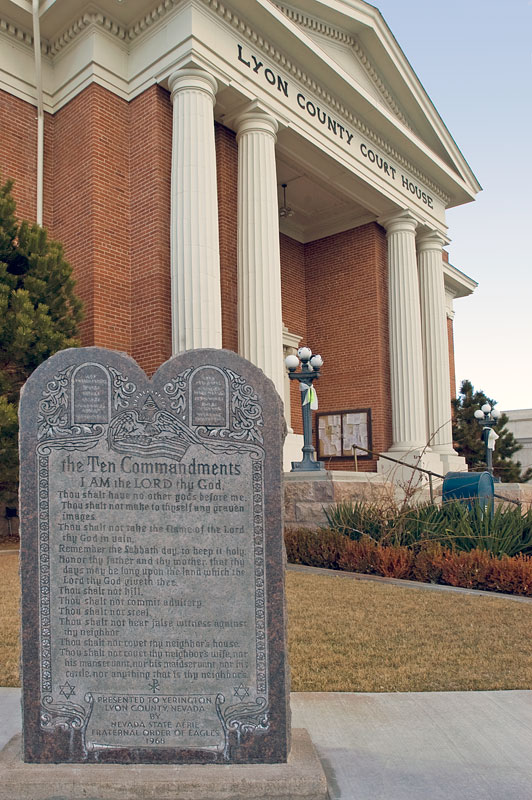
In 1969 when the Schaechterles washed up there, Yerington,
Nevada, had no bookstore. As far as I know it has never had one since. Menesini’s
dime store and soda fountain by the old courthouse had a rack of True
Confession and True Detective magazines and comic books; Nevada Drug on the
other end of Main Street boasted a more reputable magazine rack—I would buy the
first issue of Ms. Magazine there in 1972—plus a spinning comics rack and a
shelf of paperback westerns for the men and one of paperbacks featuring
terrified women in long nighties running away from brooding ruins for the
women. The furniture store had a small supply of Thornton W. Burgess animal
stories in hard cover which my mother periodically bought for my younger sister,
as she had previously bought books for me.
Yerington was not what you would call a bookish town; the
closest brush it has had with literary fame is that Nevada Barr, author of the
Anna Pigeon series of mystery books, claims to have been conceived there. The
nearest bookstore was 80 miles away in Reno, not a trip my parents took often.
But there was a library. And in 1970 when my parents bought a house in town—we had
been renting some two and a half miles out on the Mason road—the Lyon County
Library became the first public library in my experience that was within
walking distance and freely available to me. I turned twelve the summer we
moved into town and I acquired a library card as soon as we painted the last
room and unpacked the last box.
The walk was short enough to be convenient, but long enough
that it took in Yerington’s entire business district: Leaving by the back door
and angling down the driveway to Littell Street, the Reader would cross the
short ends of three blocks from California Street to Main Street, then make a
left on Main, traverse one long block from Nevada Drug past The Emporium to the
old Owl Club restaurant and casino—then half the next—Menesini’s and the
Crescent Garage

Up the steps and into the courthouse, the Reader would veer to
the left of the grand interior staircase. The library took up the two exterior rooms
at the rear of the courthouse, about a sixth of the first floor. Across the
hall was the Lyon County Sheriff’s Office, with cells for miscreants either
upstairs or below. The first room of the library held the children’s books, a
reading table, and a mean old bat of librarian as unlike the sort of motherly,
encouraging, possibly magical librarians populating children’s books as could
be. The second room—paradise—held the entire collection of books for adults,
fiction and non-fiction. On my first visit, the day I got my library card, she
limited me to two books and tried to make me stay in the children’s room. I had
to convince her that I had already read most of the books she tried to make me
choose (true) and tell her that my mother did not care what I read (false) and
name two books I wanted to get from the adult room (Oliver Twist and The Three Musketeers)
before she would let me enter that nest of vice. My mother, in fact, would skim
every book I brought home for forbidden sex scenes. As long as the books
appeared sex-free she did not care whether I read The Bobbsey Twins or The
Communist Manifesto, but her policy did make bringing home contemporary fiction
a bit of a crap shoot.
That first year I stuck to many-paged classics from the
great age of novels--Dickens and Dumas, Tolstoy and Twain, reading every holding
in the library for a favorite author, carrying home books two or three at a
time (this was in the era before book bags and backpacks, when you hugged books
to your chest as you walked) stopping at the market for a bottle of Coke to
drink on the way home. Late that year the old librarian disappeared or died of
meanness and was replaced by a librarian too busy talking on the phone to give
my books more than a cursory glance. That, and my secret acquisition of the “lost” second key
to my father’s camper trailer meant I could ditch books there to be read in the
afternoons under the backyard elm or smuggled into my bedroom on a non-library
day when my mother would not be suspicious: The Godfather, The Joy of Sex,
Breakfast of Champions, books which she would have made me take straight back
to the library, as well as more innocuous stuff, not sexy but soaked in
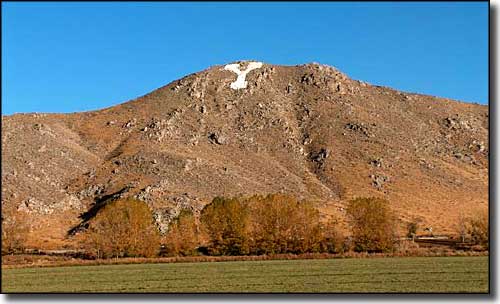
adultery and guilt, like the novels of Grahame Greene. Thus did a lonely girl
form her early taste for thick novels and for harmless deception, under the shadow of the block Y.
In Which the Reader Receives a Birthday Gift
I had nearly deleted without reading the email from Barnes and Noble, assuming it was just another advertisement, when the word "gift" caught my eye. Turns out my excellent friend Joan had ordered a copy of The Last Chinese Chef, by Nicole Mones for my e-reader in anticipation of my birthday. A true friend knows all your tastes--and for me, the only thing better than an absorbing book is an absorbing book in which food figures largely. Armed with this book and a few others for summer reading, the Reader can face fifty-five with equanimity.
Subscribe to:
Posts (Atom)